Handy Everyday Font for Creative Projects
Using Handy Everyday on Candle Labels and Product Packaging
As a web designer who often works with handmade brands, I recently had the chance to test Handy Everyday, a fresh and fun handwritten font. The first project I tried it on was designing candle labels for a local artisan shop. I needed something that felt approachable yet stylish — not too casual, not too formal. Handy Everyday hit the sweet spot. Its unique style added warmth and character without being over the top. When paired with a clean sans serif font like Lato or Montserrat in smaller text for product details, the contrast made everything pop.
The font’s readability is surprisingly strong even at small sizes, which is essential when you're fitting multiple products into one packaging layout. I found it worked best when used as a display font for titles and short descriptions. It’s perfect for adding a personal touch to physical products while maintaining professionalism.
Handy Everyday for Greeting Cards and Invitation Mockups
I next tested Handy Everyday on a set of greeting card mockups and an invitation design for a client's boutique wedding. The font brought a sense of authenticity and charm to both projects. For the cards, I used it in bold for the front title and lighter weights inside for notes and sentiments. The result was cohesive and inviting, making each card feel like a hand-written message from the heart.
On the wedding invitation, I paired Handy Everyday with a simple serif typeface for the body text. This combination created a balanced look that was both romantic and easy to read. The bride loved how the font made the invitations feel more personal and less mass-produced. That kind of emotional appeal is exactly what handmade sellers are after when trying to connect with their audience.
Designing with Handy Everyday for Planner Pages and Wall Art
When it comes to editorial design like planner pages or printable wall art, the right font can elevate your digital downloads. I’ve been creating seasonal planner templates lately and decided to try Handy Everyday as a decorative heading for section dividers. The font gave those areas a friendly, modern vibe — just what my clients wanted for their cozy, home-style planners.
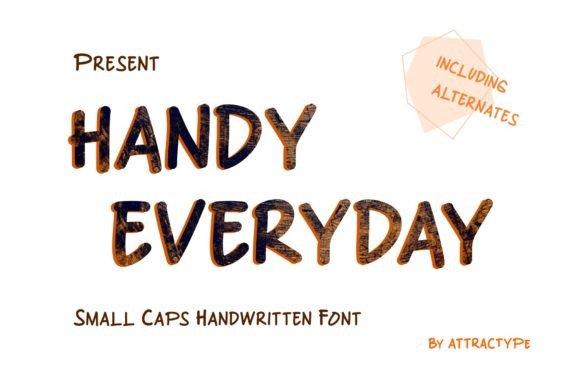
In another project, I designed a series of farmhouse-style wall art printables using this font. The natural, slightly uneven strokes of Handy Everyday added a rustic charm that fit perfectly with the theme. I also appreciated the included alternates and ligatures, which allowed me to mix things up without compromising legibility or brand consistency.
Handy Everyday for Boutique Tags and Seasonal Crafts
For a holiday collection, I used Handy Everyday on gift tags and seasonal signage. The font’s neat structure made it easy to cut on my Cricut machine, especially when working with small stickers and delicate materials. It’s always a relief to find a handwritten font that still performs well in production. The slight imperfections in the letterforms felt intentional and authentic, giving the tags a handmade aesthetic that resonated with customers.
I also used it in a set of printable Christmas ornaments and holiday cards. The playful yet elegant mood of the font helped create a festive atmosphere without being too whimsical. It’s versatile enough to work across different seasons and themes, which makes it a great addition to any creative font library, especially if you're looking for something that adds personality without overwhelming the design.
Is Handy Everyday Suitable for Merchandise and Shop Branding?
One of the standout qualities of Handy Everyday is how well it adapts to merchandise design. I tried it out on tote bag mockups and SVG-style shirt designs. The font looked fantastic on fabric, where its soft curves and warm tone stood out against solid colors. It’s particularly effective for logos and brand names because it gives off a sense of reliability and creativity at the same time.
However, I did notice that due to its handwritten nature, it’s not ideal for very tiny cuts or dense paragraphs of text. If you're creating technical product instructions or lengthy packaging inserts, stick with a more structured typeface. But for short phrases, names, and display use, Handy Everyday shines. It helps maintain brand identity across all your product assets while keeping the visual language consistent and appealing.
Font Pairing Tips and Commercial Use Considerations
To get the most out of Handy Everyday, I recommend pairing it with a minimalist sans serif or a classic serif font. In one case, I combined it with Open Sans for a line of seasonal mugs. The contrast between the two fonts created a visually engaging layout that highlighted the product name and description clearly. Another option is to pair it with a script font for a layered effect, though I usually prefer keeping it simple for better readability.
If you plan to use Handy Everyday for commercial purposes, be sure to check the licensing terms before selling anything — whether it's physical products, digital printables, or templates. Most free font packages come with clear guidelines about usage, but it’s always wise to confirm that your chosen font supports the types of sales you’re planning. Also, look into multilingual support if your shop caters to international audiences or if you want to expand your offerings in the future.
Handy Everyday for Digital Downloads and Social Media Graphics
Recently, I was asked to create a set of editable social media graphics for a new stationery line. I chose Handy Everyday for the main headline and preview text. The font’s modern typography gave the designs a fresh look that aligned perfectly with the brand’s image. Customers could easily see how the product would look once printed, thanks to the clarity of the font at various sizes.
For digital downloads, such as SVG files for cutting machines, the font performed exceptionally well. The file formats were clean and scalable, which is crucial when ensuring crisp outputs on different materials. Whether it was for digital stickers or printable signs, Handy Everyday maintained its charm across platforms, proving itself as a reliable and adaptable creative font.
Final Thoughts on Freebies and Their Impact on Brand Aesthetics
Many makers hesitate to use freebies for fear they won’t hold up under professional scrutiny. But Handy Everyday proved to be more than just a nice-to-have; it became a core part of several branding efforts. As someone who values quality and functionality, I appreciate that this Fonts category offering doesn’t skimp on style or usability. It feels premium and is packed with thoughtful design elements that cater to real-world applications.
What sets Handy Everyday apart is how it manages to blend into the background while still commanding attention. It’s not loud, but it has presence — the kind that makes your products feel curated and intentional. And in today’s market, where customers are drawn to brands with a distinct personality, that’s a huge advantage.
Why You Should Try Handy Everyday Today
Whether you're crafting product labels, preparing a shop listing, or designing a full line of handmade goods, Handy Everyday is worth exploring. Its ability to enhance the perceived quality of your products and make them more memorable is invaluable. Plus, as a freebie, it offers incredible value without sacrificing the aesthetics or functionality you need to stand out.
Give it a try on your next project — maybe start with a set of greeting cards or a product tag design. You might just find yourself reaching for it again and again. After all, a great Fonts choice can make all the difference in how your handmade creations are seen and experienced by your customers.